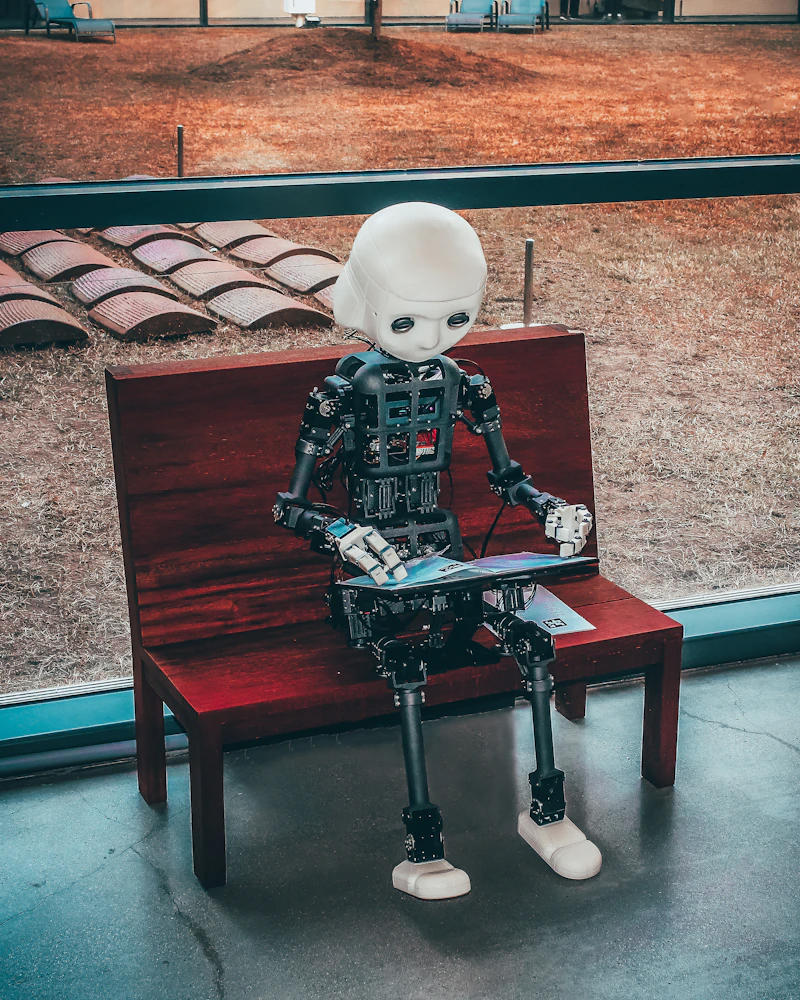
What AI still can’t do — not in 2025, not in mid‑2026. Despite the hype, large language models and multimodal systems hit very real walls. This post is a grounded, honest look at five fundamental limitations.
🧠 1. Long‑term memory & continuity
Even with 1M+ token windows, AI doesn’t remember like we do. It doesn’t build a persistent model of you, your project, or your world. Every conversation is essentially a fresh start — with a long “cheat sheet” attached. Ask a model about something you discussed three weeks ago, and it will draw a blank unless you paste the entire history. There’s no episodic memory, no cumulative learning across sessions. This makes long‑term collaboration frustrating and forces users to constantly re‑explain context.


🧩 2. True reasoning & logical leaps
AI is a brilliant mimic. It can solve math word problems, write code, and even draft legal arguments — but it does so by retrieving and recombining patterns from training data. It cannot perform genuine deductive reasoning, understand causality, or make creative logical leaps that deviate from its training distribution. When faced with a completely novel problem, it often produces plausible‑sounding nonsense. It approximates reasoning; it doesn’t reason. That’s why AI still can’t be a principal investigator, a lead engineer, or a strategic advisor without heavy human oversight.
❤️ 3. Emotional nuance & genuine empathy
AI can generate beautiful, empathetic‑sounding text. It knows the formula for consolation, encouragement, and even humor. But it doesn’t feel anything. It has no inner life, no personal stakes, and no understanding of what it’s like to be sad, anxious, or excited. This becomes painfully obvious in long, emotionally complex interactions — like grief counselling, parenting advice, or nuanced team dynamics. The AI will say all the right words, but it lacks the presence and shared vulnerability that makes human connection meaningful. In mid‑2026, this gap is wider than ever, because users have higher expectations while the models remain emotionally hollow.


🌍 4. Physical world understanding & embodiment
AI has never dropped a coffee mug, felt the weight of a toolbox, or bumped its head on a low ceiling. It has no proprioception, no sense of three‑dimensional space, and no intuitive physics. While robotics and simulation are improving, the gap between “text about the physical world” and actually understanding it is immense. AI can describe how to ride a bicycle, but it cannot know the balance, the wind, or the muscle memory. This limits its usefulness in manufacturing, surgery, emergency response, and any task that requires sensorimotor intelligence. Even the most advanced multimodal models still fumble with object permanence and spatial reasoning.
⚡ 5. The “grounded” take — why these limits matter
Authority comes from honesty. Acknowledging these limitations doesn’t make AI less impressive — it makes us better users. The tools are brilliant assistants, but they are not replacements for human judgment, creativity, or lived experience. In 2026, the smartest AI strategy is to leverage its strengths (speed, pattern recognition, generation) while staying firmly in the driver’s seat for reasoning, memory, emotional intelligence, and physical context. The future isn’t AI replacing us; it’s AI augmenting us — and that augmentation only works when we know exactly where the boundaries are.

In mid‑2026, AI is a mirror of our data — brilliant, but brittle. The real intelligence is still between your ears.
— DigitalFixerAI, grounded in reality.
Comments
Post a Comment